
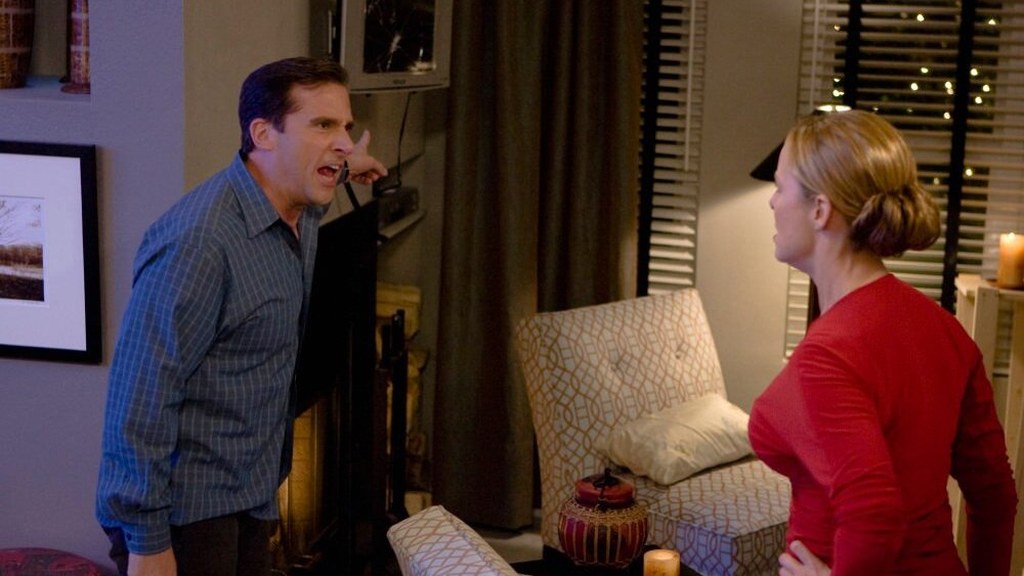
On April 10, 2008, NBC broadcast twenty-two minutes of television that permanently altered the threshold of audience endurance.
Written by Lee Eisenberg and Gene Stupnitsky, directed by Paul Feig, and filmed just before the 2007–2008 Writers Guild of America strike brought Hollywood to a standstill, Season 4, Episode 9 of The Office—titled simply “Dinner Party”—did something radical: it stripped away the fluorescent safety net of the Dunder Mifflin Scranton branch and trapped its characters inside a domestic war zone.
Most sitcom dinner parties rely on familiar tropes: burnt roasts, quirky neighbors knocking on the door, and misunderstandings that wrap up with an apologetic toast. “Dinner Party” threw that formula into an incinerator. Instead, it delivered an unrelenting, suburban American horror story—Edward Albee’s Who’s Afraid of Virginia Woolf? staged inside a beige Pennsylvania gated condominium, set to the sultry acoustic chords of an amateur pop single written by an ex-assistant.
Nearly two decades later, the episode stands as the undisputed high-water mark of cringe comedy. But what makes “Dinner Party” so endlessly rewatchable despite being almost physically painful to witness? The secret lies in the precision mechanics of deadpan timing, psychological hostage-taking, and micro-expressive performance art.
1. The Architecture of Entrapment
The brilliance of “Dinner Party” begins before anyone ever sets foot outside the Scranton business park. For four seasons, Jim Halpert (John Krasinski) had perfected the art of ducking Michael Scott’s (Steve Carell) social invitations through an impenetrable arsenal of vague, polite excuses.
The cold open systematically dismantles that defense. By fabricating a corporate mandate that requires everyone to work late on a Friday evening, Michael lures Jim into declaring on camera that he has no conflicting plans. The second corporate “cancels” the overtime, Michael springs the steel trap:
“You said you didn’t have plans. So dinner with Jan and me tonight. You and Pam.”
Jim’s panicked attempt to fabricate an emergency—offering to abandon his fiancée to save his imaginary flooded apartment—is instantly vetoed by Pam Beesly (Jenna Fischer), who refuses to go down alone (“To my house? To a house I’ve never been to, to see a woman I’m terrified of, with a man who thinks my house is haunted?”).
The psychological stakes are established before the opening credits roll: this is not a casual social gathering. It is an ambush.
The Chamber Drama Blueprint
Unlike standard multi-camera sitcoms that use multiple storylines to give audiences breathing room, "Dinner Party" is a relentless bottle episode. Once the front door of Michael and Jan's condo closes, the camera refuses to cut away. The audience is held captive in the exact same claustrophobic foyer as the guests.
2. Deadpan Silence as a Weapon
As we examined in our analysis of deadpan absurdism and modern comedic timing, contemporary humor lives in the excruciating, unvarnished spaces where characters refuse to diffuse tension. Traditional sitcoms panic in the presence of silence; they pump the soundtrack full of studio laughter, canned applause, or rapid-fire punchlines.
“Dinner Party” does the exact opposite: it turns ambient silence into physical pressure.
Director Paul Feig lets the camera linger on the agonizing pauses between sentences. When Michael proudly gives Jim and Pam the condo tour, the horror is conveyed almost entirely through micro-expressions: * The forced, manic grin frozen on Melora Hardin’s face as Jan asserts ownership over every square inch of the living space. * Jim’s desperate, silent plea directly into the documentary lens—no longer a playful wink, but a genuine cry for intervention. * The crushing realization that Jan has systematically relegated Michael to the margins of his own home: his office replaced by her “Serenity by Jan” candle workshop, his possessions confined to a neon St. Pauli Girl beer sign, and his nightly sleeping arrangement reduced to a small cushioned footstool ottoman (“See? He fits perfectly!”).
Every detail tells a story of financial predation, domestic emasculation, and performative coupledom on the brink of total psychological collapse.
3. “Soft Teeth” and the Osso Buco Standoff
The culinary centerpiece of the evening is Jan’s osso buco, which requires an agonizing three-and-a-half-hour braising time after the guests have already arrived. By starving their guests—including Andy Bernard (Ed Helms) and Angela Martin (Angela Kinsey)—Michael and Jan ensure that blood sugar levels crater while alcohol consumption skyrockets.
The dining sequence represents the masterclass of passive-aggressive warfare:
- The Wine Dipping: Michael casually dunks his raw meat into his glass of red wine, offering the immortal rationalization: “You know I have soft teeth… how can you say that?”
- The Poison Accusation: Jan playfully warns Pam not to eat the food, suggesting she might have spiked it with arsenic because of Michael’s past infatuation with her. Pam’s deadpan terror as she immediately pushes her plate away is acting at its most authentic.
- The Forced Investment: Before food is even served, Michael and Jan corners the guests into investing \$10,000 in Jan’s failing artisanal candle company, treating financial extortion as basic dinner etiquette.
The Plasma Screen Collapse: The scene where Michael demonstrates his wall-mounted plasma TV ("Sometimes I will just stand here and watch television for hours") took dozens of takes because Steve Carell kept extending the screen mere inches while John Krasinski and Jenna Fischer broke into uncontrollable laughter. It remains the most notorious blooper reel in television history.
4. Hunter’s Song: “That One Night”
No discussion of “Dinner Party” is complete without dissecting the musical interlude. When Jan puts on a CD recorded by her former underage corporate assistant, Hunter, the room descends into pure, unfiltered madness.
The lyrics (“You took me by the hand / Made me a man / That one night / You made everything alright…”) are not-so-subtle code for a predatory sexual encounter between Jan and her teenage subordinate. Yet the comedy peaks not in the song itself, but in Jan’s unhinged physical reaction: swaying slowly in the living room, eyes half-closed, lip-syncing every word while attempting to entice Jim into dancing with her.
Jim’s stiff, terrified posture—clutching his beer bottle against his chest like a riot shield—is physical comedy perfection. It is a moment where the boundary between humor and psychological trauma completely dissolves.
5. The Dundee Meets the Plasma: The Ultimate Meltdown
The episode’s final act escalates with the precision of a classical Greek tragedy. When Dwight Schrute (Rainn Wilson) crashes the gathering with his former childhood babysitter (Beth Grant) and his own wine glasses, the fragile social contract officially disintegrates.
What follows is an unrelenting barrage of domestic truth-bombs:
Michael: “That is a \$200 plasma screen TV that you just killed! Good luck paying me back on your zero dollars a year plus benefits salary, babe!”
Michael: “Snip, snap, snip, snap, snip, snap! You have no idea the physical toll that three vasectomies have on a person!”
When Jan finally hurls one of Michael’s beloved Dundie trophies straight through the screen of the tiny plasma TV, the shock is visceral. The entrance of two local police officers—summoned by the neighbors for a domestic disturbance—does not feel like a sitcom punchline; it feels like the inevitable arrival of emergency medical personnel at the site of a high-speed collision.
Why “Dinner Party” Remains Untouchable
In an era where streaming algorithms prioritize comfort television and background viewing, “Dinner Party” refuses to be ignored. It demands your active, cringing participation. It forces the audience to squirm on the couch, look away from the screen, and laugh through clenched teeth.
The episode endures because it captures a universal adult terror: being trapped in the home of a couple whose mutual hatred has reached critical mass, forced to smile politely while their domestic world burns down around your dessert plate.
Twenty-two minutes of pure, unadulterated, pitch-black human awkwardness. It wasn’t just great television; it was an endurance test that comedy has spent the last two decades trying to match.